Course icon
Course

Leadership

Managing Yourself,
People, and Results

Start:
January 20, 2026
Duration:
3 months
Format:
5 modules, 24 sessions
Course icon
Start:
January 20, 2026
Duration:
3 months
Format:
5 modules, 24 sessions
Yuliia Kovtun
Mastermind
Facilitator
Oksana Smilka
Author and Speaker
Polina Semonova
Coach
Mastermind
Facilitator
Yuliia Kovtun
Yuliia Kovtun
Author and Speaker
Oksana Smilka
Oksana Smilka
Coach
Polina Semonova
Polina Semonova

WHO IS THIS COURSE FOR:

AMBITIOUS
ENTREPRENEURS

You’re looking for the best practices to boost your team’s performance and manage processes effectively – to step out of daily operations and free up time for strategic growth.

LEADERS AND
MANAGERS

You strive to build effective processes and foster human-centred interaction within the company, maintain genuine connections with the team, and make confident decisions in uncertain circumstances that align with your values and beliefs.

HR Managers and
Business Partners

You influence business results while maintaining a human approach within the team, striving to find the balance between high performance expectations and supporting people.

A-players and
informal leaders

You want to comprehensively develop your leadership competencies and enhance your management skills to inspire, motivate, and lead your team toward achieving goals by your own example.

Video thumbnail
2:37
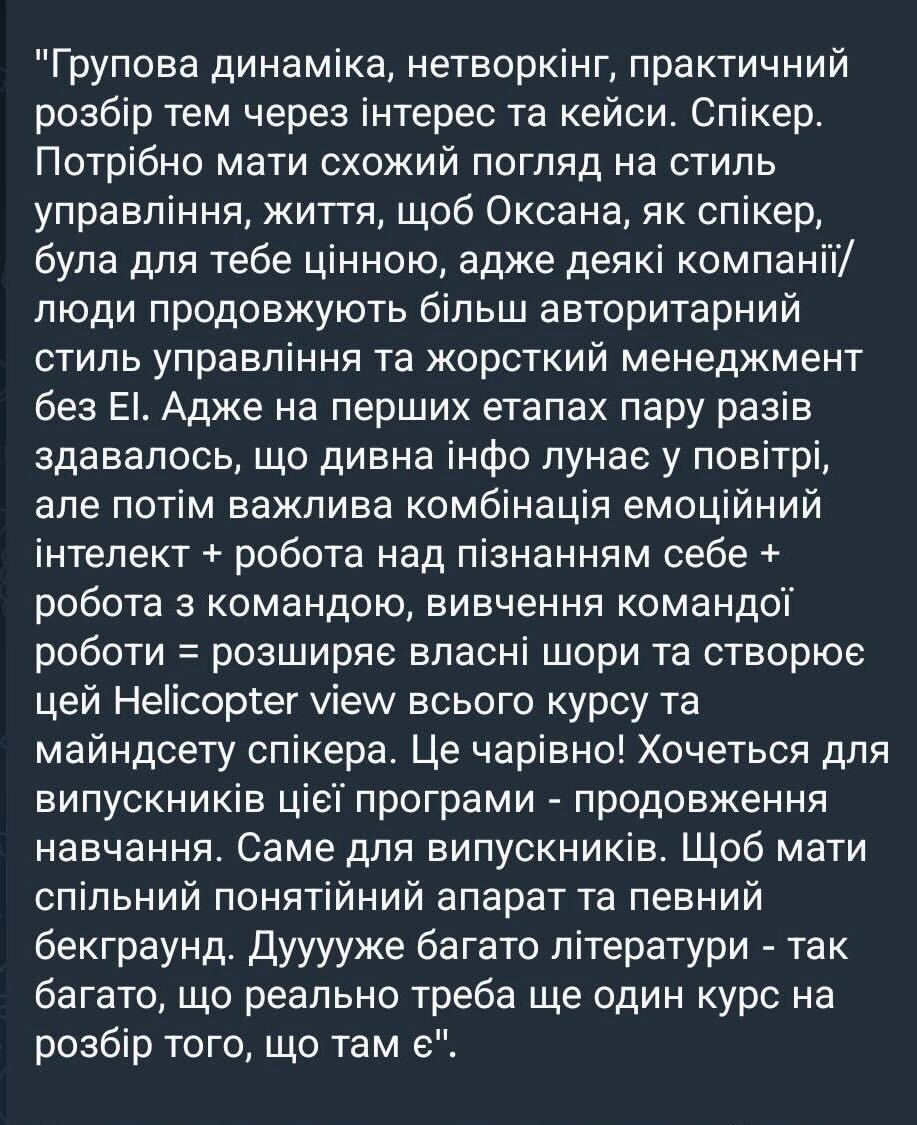
Business always reflects your inner state – even when it seems to be all about strategy. True leadership begins with an honest meeting with yourself, because people follow not your title, but your presence.

Program

( 5 modules )
MODULE 1

UNDERSTANDING LEADERSHIP

WHAT YOU WILL GAIN AFTER THIS MODULE:

  • You will identify the leadership paradigm in which you and your company operate. 
  • You will realize what type of leader you are and how to choose your working environment and people.
  • You will be able to align your company’s dominant corporate culture with the one needed to achieve business goals.
  • You will identify the types of power inherent to you and understand their impact on management results.
  • You will learn what Agile leadership is, how to develop it, and why old approaches are no longer effective.
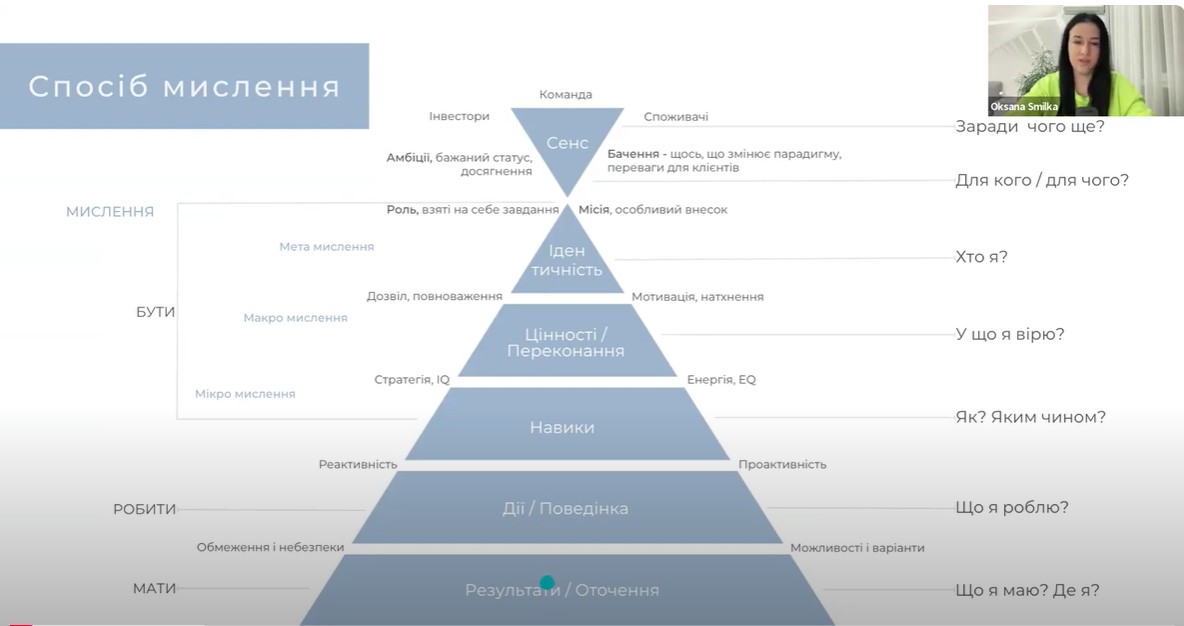
  • You will explore mental models and practices that support your successful leadership.
Превью відео модуля 1
1:43
MODULE INTRO 1
4 session
13 practical exercises
session 1
THE ESSENCE AND PARADIGMS OF LEADERSHIP
Коли
January 20, 2026
18:00 - 21:00

Program

  • Introduction to the topic of leadership.
  • Study of leadership paradigms 1.0, 2.0, and 3.0: where you are now and which leadership style is needed today.
  • Analysis of why a leader who succeeds in one company may not achieve success in another.
  • Why have old management tools that once proved effective stopped working?
  • Theories X and Y: what is important for employees from the point of view of managers, and what is important in reality. 
  • Types of corporate cultures and their connection to modern leadership paradigms.
  • Exploring the paradox of competing values: internal vs. external orientation, stability vs. flexibility.
  • Fundamentals of conscious leadership: mental models and practices needed to achieve success

practical exercises

  • Defining your paradigm and leadership style according to Theory X and Theory Y.
  • Assessing leadership maturity: good and bad leaders.
  • Understanding corporate culture using the OCAI methodology.
  • Analysing 5 types of power in management.
VIDEO EXCERPT FROM THE SESSION
session 2
Agile leadership
Коли
January 23, 2026
18:00 - 21:00

Program

  • Discussion of the practical exercise results on identifying company culture.
  • Exploring the paradox of power: how we gain and lose influence.
  • Overview of the 5 types of power in management.
  • Exploring the concepts of Agile and Agile leadership: the leader’s role in Agile transformations.
  • Analysis of the “Autonomy – Alignment” matrix.
  • Understanding the company’s purpose: profit or value for the customer.
  • Exploring the metaphor “Leader as a gardener.”
  • Identifying bureaucratic traps: Parkinson’s Law.
  • Discussion of new strategies: the importance of aligning progress with reality (why Martin Luther King said, “I have a dream,” not “I have a five-year plan”).
  • Identifying the key changes that need to happen in our organizations.

practical exercises

  • Determining your company’s position on the “Autonomy – Alignment” matrix.
  • Analysing power and influence: identifying the strengths and limitations of your management style.
  • Reviewing the 10 roles of an Agile People Coach.
  • Video on the topic of psychological safety.
session 3
CONSCIOUS LEADERSHIP
Коли
January 27, 2026
18:00 - 21:00

Program

  • Conscious leadership: mental models, skills, and practices necessary for it.
  • 4 actions, 4 goals, and 9 qualities of a leader.
  • Power and influence.

practical exercises

  • 5 types of power in management.
session 4
AGILE PEOPLE COACHING AND PSYCHOLOGICAL SAFETY
Коли
January 30, 2026
18:00 - 21:00

Program

  • Understanding the leader’s role as a coach: coaching competence is sufficient.
  • Differences between coaching, mentoring, and facilitation.
  • Overview of the 9 principles of Agile leadership.
  • Studying psychological safety as the foundation of Agile leadership and its impact on employee motivation and accountability.
  • Comparing the roles of Agile Coach and Agile People Coach: analysis of the 10 roles of an Agile People Coach.
  • Self-leadership: how understanding yourself affects managing others.

practical exercises

  • In-depth exploration of Agile principles.
  • 12 keys to developing skills for switching between Agile People Coach roles.
  • Identifying the most and least expressed Agile People Coach roles and those worth developing.
  • Video on DISC behaviour styles.
MODULE 2

BEING A LEADER:
SELF-MANAGEMENT

WHAT YOU WILL GAIN AFTER THIS MODULE:

  • You will receive practical tools for developing emotional intelligence.
  • You will understand your behavioural motives and self-esteem, and find balance between them.
  • You will identify how to break free from limitations and develop your leadership skills.
  • You will learn to make decisions aligned with your values.
  • You will master techniques of effective communication and the ability to set and defend your personal boundaries.
  • You will understand how your attention works – when multitasking is effective and when it’s better to focus on one task.
  • You will realize how self-organization within a set timeframe affects your effectiveness.
  • You will receive practical strategies for staying focused. 
  • You will analyse your time drainers, their causes, and possible solutions.
Превью відео модуля 2
1:09
MODULE INTRO 2
5 sessions
13 practical exercises
session 1
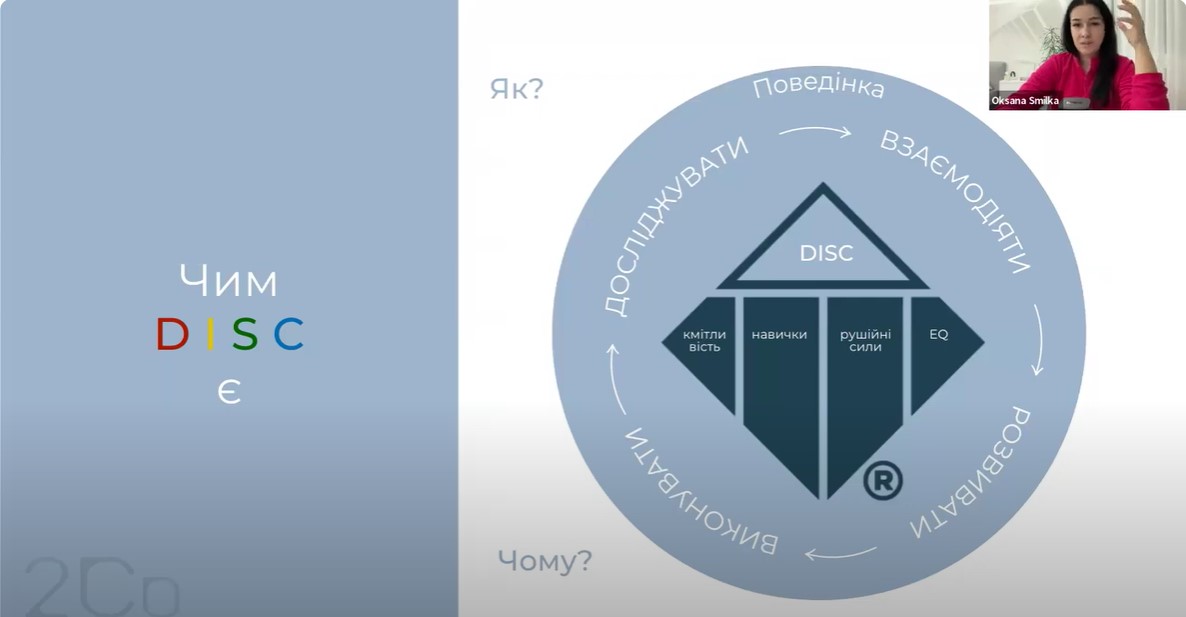
FUNDAMENTALS OF THE DISC MODEL
Коли
February 3, 2026
18:00 - 21:00

Program

  • What the DISC behaviour model is and how understanding it improves communication.
  • How to recognize behavioural styles through verbal and non-verbal cues.
  • Strengths and limitations of each behavioural style.
  • How to use DISC for more effective teamwork.
  • Common mistakes companies make when implementing DISC.
  • Overview of alternative models: PAEI and MBTI.

practical exercises

  • Group work on cases to reinforce DISC theory.
  • Exercises on adapting communication strategies to different behavioural styles.
VIDEO EXCERPT FROM THE SESSION
session 2
UNDERSTANDING YOURSELF THROUGH BEHAVIOUR, MOTIVES, AND VALUES
Коли
February 6, 2026
18:00 - 21:00

Program

  • Analysis of DISC behavioral styles: working with your personal report.
  • Identifying strengths and weaknesses of your behaviour and motives.
  • How behavioural adaptation can lead to stress – and how to manage it? 
  • How well does your role and position align with your behaviour and motives?
  • The wheel of behavior and motives: the key to self-awareness.
  • Report analysis, ACI block: orientation toward the external and internal world.
  • How to create a list of competencies from your report for personal development? 
  • The importance of understanding your own values for making effective decisions.

practical exercises

  • Case analysis to strengthen knowledge about behaviour and motives.
  • Team exercises that demonstrate different behavioural styles.
  • Creating your own list of values.
session 3
UNDERSTANDING YOURSELF THROUGH EMOTIONAL LITERACY AND THINKING ERRORS
Коли
February 10, 2026
18:00 - 21:00

Program

  • What emotional literacy is and how to develop it for conscious leadership.
  • Mental models and their importance for effective communication. The metaphor of “The Rider, the Elephant, and the Path.”
  • 4 biases and 5 thinking traps that affect leadership decisions.
  • The “Clean Leadership” model: 4 identities of a leader.

practical exercises

  • Developing emotional intelligence through specific practices.
  • The leader’s four “selves”: what and how you should develop.
  • The “full-colour thinking” technique for avoiding cognitive biases and improving decision-making.
session 4
UNDERSTANDING YOURSELF THROUGH SELF-AWARENESS, SELF-REGULATION, AND SELF-MOTIVATION
Коли
February 13, 2026
18:00 - 21:00

Program

  • Assessment of emotional intelligence based on your personal report.
  • Tools for developing emotional competencies.
  • Self-motivation, self-esteem, and procrastination: is there a connection?
  • Overcoming self-sabotage.

practical exercises

  • Using the states matrix to assess emotions and plan effectively.
  • Keeping an emotion journal for self-observation.
  • STOP and S-TLC techniques for improving self-regulation.
session 5
MANAGING EFFECTIVENESS: RELATIONSHIP WITH TIME
Коли
February 17, 2026
18:00 - 21:00

Program

  • Time management or attention management.
  • The switch cost effect, or why the Pomodoro technique doesn’t work?
  • Productivity vs. effectiveness.
  • Perfectionism as one of the biggest killers of productivity.
  • Self-discipline and self-motivation in relation to time.
  • Identifying time drainers: causes and solutions.
  • Emotional state and its impact on attention focus management.
  • Prioritization is not the same as focus.
  • Prioritization. A new look at Eisenhower’s matrix: the square of quality, stress, pressure, and degradation. 
  • Fogg’s Model: how to develop a new habit. 
  • What to do and what not to do in managing personal effectiveness?

practical exercises

  • Task audit and prioritization. How to stay focused on what matters.
MODULE 3

BEING A LEADER: MANAGING PEOPLE

WHAT YOU WILL GAIN AFTER THIS MODULE:

  • You will learn to understand people’s behaviour and needs to achieve better results.
  • You will be able to build balanced teams focused on achieving the company’s strategic goals.
  • You will master the skills of effective team management at all stages of its development.
  • You will be able to conduct an objective assessment of your team’s potential and make well-grounded promotion decisions.
  • You will learn to provide constructive feedback that supports employees’ accountability for results.
  • You will develop active listening skills – the ability to truly hear others, even when they don’t say things directly.
Превью відео модуля 3
0:41
MODULE INTRO 3
5 sessions
13 practical exercises
session 1
UNDERSTANDING OTHERS THROUGH SOCIAL AWARENESS
Коли
February 20, 2026
18:00 - 21:00

Program

  • Analysis of your personal report: how you understand the people around you.
  • What is social awareness and empathy? The main types of empathy.
  • Understanding others’ emotions: how to influence them through emotions.
  • Emotional arithmetic: practical application in management.
  • How to listen and hear: levels of listening and what prevents us from being attentive.

practical exercises

  • Active listening technique: how to develop the skill.
  • The “Needle’s Ear” exercise for concentration in communication. 
  • Practical tips for better understanding others.
session 2
(DE)MOTIVATION
Коли
February 24, 2026
18:00 - 21:00

Program

  • “Interest – Competence” matrix: employee motivation analysis.
  • Signs and stages of demotivation: how to apply them.
  • When it’s time to fire someone: the point of no return.
  • How to prevent demotivation: practical methods.
  • Stress, energy, and motivation: how they are interconnected.
  • The “Boiling Frog” model: how stress affects productivity.

practical exercises

  • Identifying personal motives. Test.
  • Assessing burnout level. Test.
  • Case analysis: how to avoid demotivation.
session 3
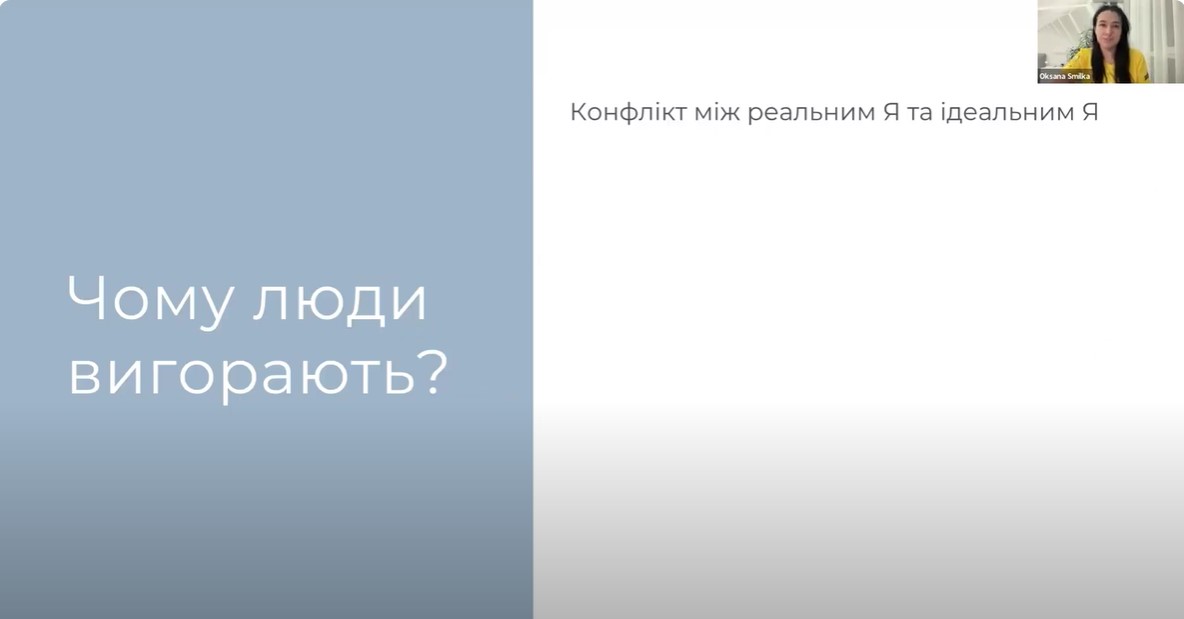
DIAGNOSIS AND PREVENTION OF BURNOUT IN BUSINESS
Коли
February 27, 2026
18:00 - 21:00

Program

  • What is burnout, and how does it occur?
  • How to diagnose burnout: 12 stages.
  • Stress and burnout: are they connected?
  • Preventing burnout: what leaders and employees should do.
  • 6 key management aspects that significantly improve your team’s well-being.

practical exercises

  • Express test for diagnosing burnout.
  • Visualization of positive and negative stress: a clear difference.
VIDEO EXCERPT FROM THE SESSION
session 4
TEAM BUILDING
Коли
March 3, 2026
18:00 - 21:00

Program

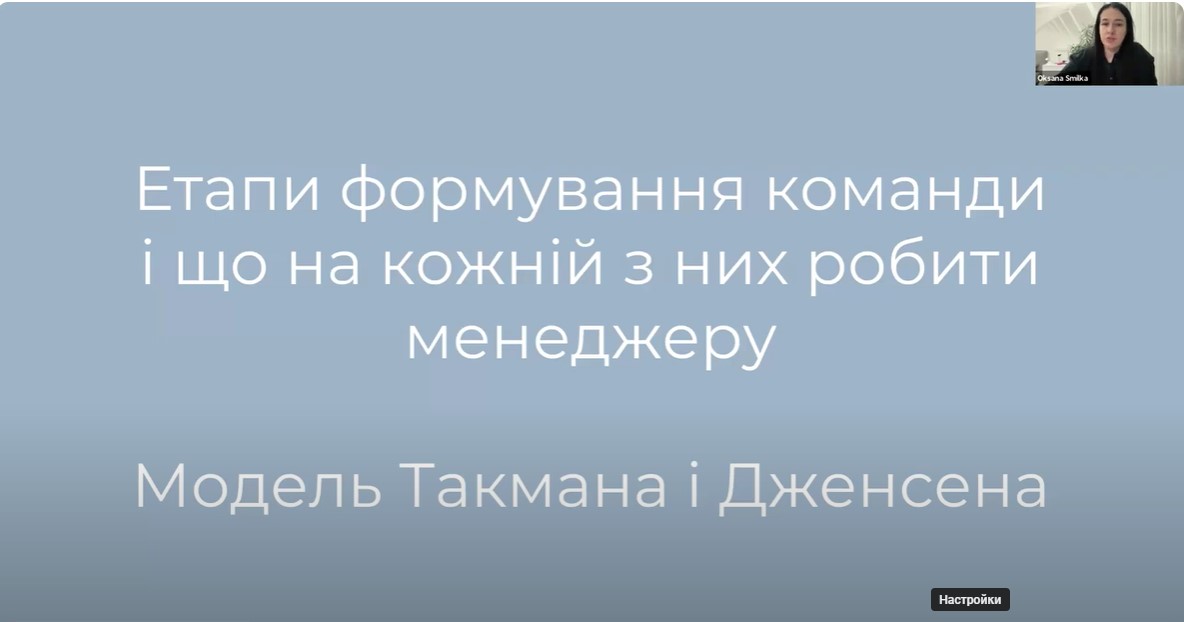
  • The organizational life cycle and stages of team formation.
  • The leader’s functions at each stage of team development.
  • The behaviour change formula B = f(P, E): how environmental factors and individual traits influence the team.
  • Team Canvas: how to build productive communication and collaboration within a team?

practical exercises

  • Creating your own Team Canvas for your team.
  • Case study: how to choose the best candidate for a leadership position among three applicants?
VIDEO EXCERPT FROM THE SESSION
session 5
TEAM DYSFUNCTIONS
Коли
March 6, 2026
18:00 - 21:00

Program

  • How to identify dysfunctional teams and overcome challenges.
  • The 5 main dysfunctions of a team, according to Patrick Lencioni.
  • How to use the 9-box matrix method to assess employees.
  • The ABCDEF players model: how to change the strengths and weaknesses of a team.

practical exercises

  • Team audit for dysfunction.
  • Assessing team and employee potential.
  • Developing strategies to improve collaboration and productivity.
MODULE 4

ACTING AS A LEADER:
MANAGEMENT FUNCTIONS

WHAT YOU WILL GAIN AFTER THIS MODULE:

  • Balance between intuitive and systematic approaches to managing people.
  • Practical tools for delegation, team development, and building effective communication.
  • You will learn to prevent and resolve conflicts while maintaining a productive team atmosphere.
  • You will receive a checklist for implementing changes and 350 questions for conducting 1-on-1 meetings.
  • You will increase your team’s efficiency by helping it go beyond standard approaches.
Превью відео модуля 4
0:44
MODULE INTRO 4
7 sessions
13 practical exercises
session 1
PLANNING, DELEGATION, AND CONTROL POINTS
Коли
March 10, 2026
18:00 - 21:00

Program

  • Why employees don’t perform tasks as expected.
  • The difference between setting tasks and delegating
  • Pros, cons, and common mistakes of delegation.
  • The 7 levels of delegation: when and how to apply them.
  • Control in delegation: 5 key checkpoints.
  • What is micromanagement?

practical exercises

  • Quadrants: quality, crisis, pressure, degradation. Review your tasks and identify what needs to change.
  • Assessing your level of control and delegation: how to optimize the process.
session 2
GIVING FEEDBACK
Коли
March 13, 2026
18:00 - 21:00

Program

  • Feedback: types, techniques, and models for effective communication.
  • Radical candor: how to give negative feedback constructively.
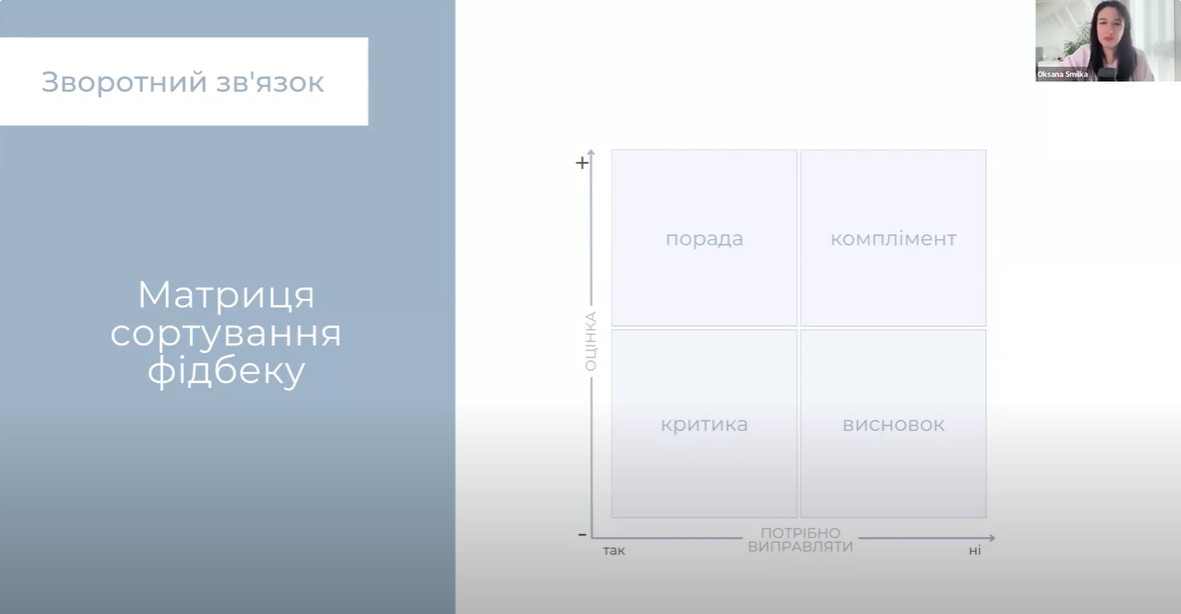
  • Feedback sorting matrix.
  • STOP factors: when it’s better not to give feedback.
  • What to do if someone is under stress?
  • The “1-on-1” format: how to introduce it correctly in a company and why these meetings may not work?

practical exercises

  • Practical cases. Building a conversation plan with an employee using a feedback technique.
  • Watching a film and analysing key points: when feedback works and when it turns into aggression.
VIDEO EXCERPT FROM THE SESSION
session 3
CONSTRUCTIVE COMMUNICATION AND CONFRONTATION
Коли
March 17, 2026
18:00 - 21:00

Program

  • How to stand up for your opinion while maintaining productive relationships.
  • 4 principles of constructive communication.
  • ADOPT problem-solving matrix.
  • How to make any conversation constructive.
  • PINE model: 4 steps of constructive confrontation.

practical exercises

  • Case analysis.
session 4
CONFLICT MANAGEMENT
Коли
March 20, 2026
18:00 - 21:00

Program

  • Conflicts: indicators, causes, levels, and types.
  • 5 conflict behaviour strategies.
  • Conflict escalation model.
  • Stages of working with conflict: the conflict circle.
  • How to prevent conflicts and resolve them constructively.
  • Traffic light model and conflict map.
  • The ABC triangle of conflict.
  • Common mistakes in conflict management.

practical exercises

  • Analysing real conflict triggers: how to find a way out of a difficult situation. 
  • Identifying your own conflict behaviour strategy.
session 5
SYSTEM OF REFLECTION AND DECISION-MAKING
Коли
March 24, 2026
18:00 - 21:00

Program

  • VUCA and BANI world: how to make decisions under uncertainty.
  • Cynefin Framework for understanding complex systems.
  • Cartesian coordinates as an analysis tool.
  • Vroom–Yetton decision-making model.

practical exercises

  • Analysis of real participants’ cases for decision-making.
  • Applying the Vroom–Yetton model to your managerial decision.
VIDEO EXCERPT FROM THE SESSION
session 6
PEOPLE DEVELOPMENT
Коли
April 14, 2026
18:00 - 21:00

Program

  • The Kolb Model: how adults learn.
  • 4 stages of learning and tools for developing competencies.
  • Where to start with employee development. 
  • “Awareness-Competence” matrix.
  • Socratic dialogue as a tool for developing thinking.
  • Updated IGROWTH model.
  • Employee effectiveness formula.
  • Situational leadership and its impact on people development.
  • Models: CREDO, AID, Can – Want – Must.
  • Individual development plan for yourself and team members.

practical exercises

  • Audit and assessment of 12 management functions: identifying growth points.
  • Creating an individual development plan for yourself or your team.
session 7
CHANGE STRATEGY
Коли
April 17, 2026
18:00 - 21:00

Program

  • The McKinsey 7-S Model for understanding systemic changes.
  • ADKAR: implementing change at the individual level.
  • Kübler-Ross curve: reaction to change.
  • Change management according to the Satir model. 
  • 3 levels of resistance to change. The formula for successful change.
  • “Influence-Interest” matrix in implemented changes
  • How changes affect team dynamics.
  • 30 reasons for failure in implementing change.
  • Checklist for successful change implementation.

practical exercises

  • Analysis of one’s own emotions and perception of change: 30 reasons for failure.
  • Case study: implementing changes using the ADKAR model and checklist.
MODULE 5

MANAGING RESULTS

WHAT YOU WILL GAIN AFTER THIS MODULE:

  • Best practices and examples of implementing the OKR system.
  • You’ll learn to set goals based on actions and values, with key results that reinforce those goals.
  • You’ll be able to accurately measure staff engagement and loyalty, which will help reduce staff turnover and improve business performance. 
  • You will avoid mistakes when setting goals, and the key results you set will meet the needs of your business. 
  • You will assess the impact of results, changes, and decisions on your team’s loyalty and engagement.
Превью відео модуля 5
0:58
MODULE INTRO 5
3 session
3 practical exercises
session 1
OKR GOAL-SETTING SYSTEM
Коли
April 21, 2026
18:00 - 21:00

Program

  • What OKRs are and how they differ from KPIs. 
  • What OKRs should be: ambitious Moonshot or realistic Roofshot.
  • How to track achievements: success criteria and types of key results (KR).
  • The relationship between OKRs and overall effectiveness.
  • “The Tale of Two Bonuses”: how productivity is linked to rewards.
  • The combination of CFR, IRR, and OKRs: how they interact.
  • New approaches to productivity management.
  • Common mistakes in the goal installation process.

practical exercises

  • Group work: creating OKRs
session 2
EMPLOYEE LOYALTY AND ENGAGEMENT RESEARCH
Коли
April 24, 2026
18:00 - 21:00

Program

  • What is common and what is different between satisfaction, loyalty, and engagement indicators?
  • The impact of engagement culture on the team. 3 categories of employees.
  • How to properly evaluate loyalty and engagement, and why it matters.
  • How to conduct surveys so that people don’t stay silent.
  • How to analyse indicators and improve them: the “Mariana Trench” concept
  • Developing an action plan based on research results.

practical exercises

  • Assessing loyalty and engagement in your team. 
  • Creating a further action plan based on the research results.
VIDEO EXCERPT FROM THE SESSION
session 3
FINAL SESSION AND REFLECTION
Коли
April 28, 2026
18:00 - 21:00

Program

  • Course summary and sharing impressions.
  • Q&A session.
  • Reflection: what expectations you had when starting the course and what value you’ve gained from it.

practical exercises

Після курсу ти:

You’ll step out of operational overload and free up time, energy, and focus - not only for strategic tasks and launching new projects, but also for yourself and your loved ones.

You’ll communicate your point of view clearly in complex conversations, and speak in a way that helps others listen and understand you.

You’ll solve current challenges with your team and receive support and insights from other leaders.

You’ll learn to manage stress and boost your personal productivity through emotional literacy techniques.

You’ll get an accurate diagnosis of your motives, strengths, limitations, and growth areas using the internationally recognized TriMetrix Executive Coaching & EQ assessment.

You’ll build teams of people united by enthusiasm and engagement in a common cause.

You’ll see your team’s processes clearly and, like a mechanic working with a complex system, you’ll be able to analyse and diagnose weak points in your team, understanding exactly what and how needs to be changed or improved.

You'll regain or gain a sense of lightness, confidence, and fulfilment in life.

You’ll gain a better understanding of yourself and learn to interact effectively with others, unlocking their full potential while considering their inner needs, motives, and behavior styles.

THE COURSE FEE INCLUDES:

Program
OPTIMAL
PREMIUM
TriMetrix Executive Coaching Test
Personal EQ Test
Test Interpretation
5 Learning Modules
Practical Tasks in Miro
Telegram Group
Learning Space in Notion
Leader’s Library
Alumni Community
DISC Business Game
Masterminds
Individual Coach Session
Lifetime Access to New Courses Session
Lesson Recordings
3 months
6 months
Individual Session: Coaching, Mentoring, or Consultation with Oksana Smilka

Do you want to develop your team? – Special conditions apply for teams! Write to us at office@twoco.eu, and our manager will share the details with you.

COURSE TEAM

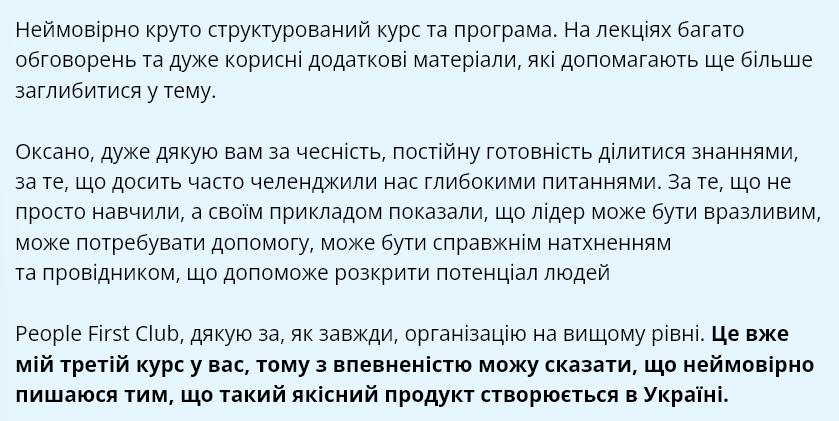
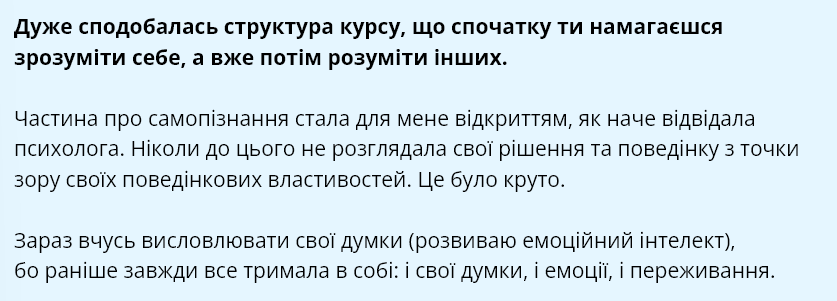
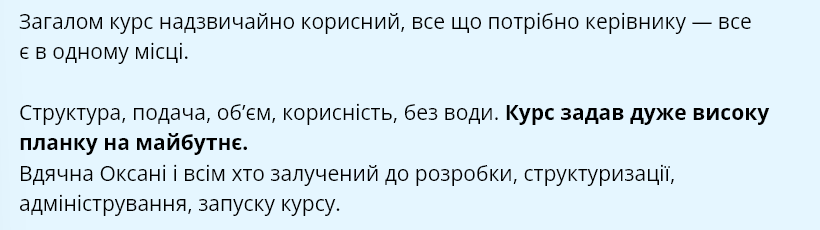
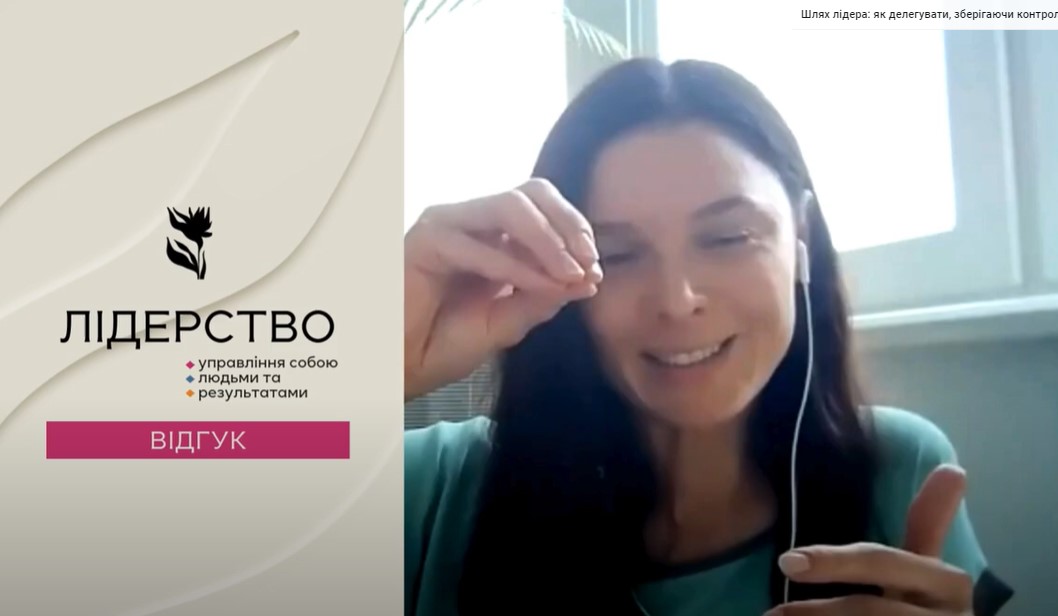
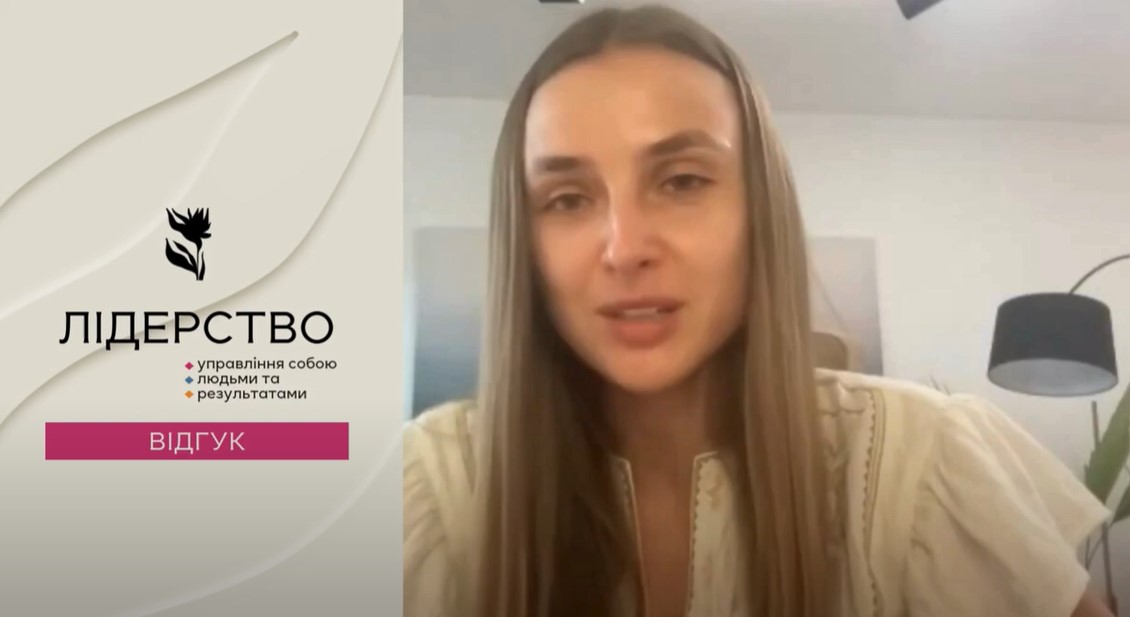
feedback gallery:
Іванка Пашинська
Human Resources Manager at Selecto
Анастасія Коновалова
Talent Acquisition Partner at WOO Network
Людмила Артюхова
Projektleiterin E-Commerce / E-Business at Krones AG
Андрій Тищенко
Senior Associate at Asters
Зеновія Сліпченко
Project Manager at DevCom
Інна Зелінська
керівник відділу проектування ТОВ "Промавтоматика Вінниця"
Євгенія Данілова
Human Resources Generalist at Atwix
Катерина Мірошнікова
Head of Recruitment and People Teams at GT
Неля Титечко
Head of Revenue Operations Quality Assurance at iDeals
Руслана Титечко
Director of Strategic Partnerships at Selecto
Єлизавета Воробйова
Head of Talent Acquisition at Mate academy
Ольга Подільчик
HR People Partner у Quarks Tech
Альона Осадчук
Technical Recruiter at Meta
Вікторія Кобзар
Logistics Country Manager at Mondelez Ukraina
Ірина Пакош
Learning and Development Manager at Raiffeisen Bank International AG
Оля Голубєва
Senior Designer at EPAM
Любов Стець
директор з управління персоналом ПрАТ «Компанія Ензим»
Аліна Бурлака
Recruitment Manager / HR Generalist at INCOAlliance
Тетяна Сафроненко
HR Business Partner / HR People Partner / Кар'єрна радниця / Менторка для HR / Консультантка КПТ

feedback gallery:
Іванка Пашинська
Human Resources Manager at Selecto
Анастасія Коновалова
Talent Acquisition Partner at WOO Network
Людмила Артюхова
Projektleiterin E-Commerce / E-Business at Krones AG
Андрій Тищенко
Senior Associate at Asters
Зеновія Сліпченко
Project Manager at DevCom
Інна Зелінська
керівник відділу проектування ТОВ "Промавтоматика Вінниця"
Євгенія Данілова
Human Resources Generalist at Atwix
Катерина Мірошнікова
Head of Recruitment and People Teams at GT
Неля Титечко
Head of Revenue Operations Quality Assurance at iDeals
Руслана Титечко
Director of Strategic Partnerships at Selecto
Єлизавета Воробйова
Head of Talent Acquisition at Mate academy
Ольга Подільчик
HR People Partner у Quarks Tech
Альона Осадчук
Technical Recruiter at Meta
Вікторія Кобзар
Logistics Country Manager at Mondelez Ukraina
Ірина Пакош
Learning and Development Manager at Raiffeisen Bank International AG
Оля Голубєва
Senior Designer at EPAM
Любов Стець
директор з управління персоналом ПрАТ «Компанія Ензим»
Аліна Бурлака
Recruitment Manager / HR Generalist at INCOAlliance
Тетяна Сафроненко
HR Business Partner / HR People Partner / Кар'єрна радниця / Менторка для HR / Консультантка КПТ

feedback gallery:
Іванка Пашинська
Human Resources Manager at Selecto
Анастасія Коновалова
Talent Acquisition Partner at WOO Network
Людмила Артюхова
Projektleiterin E-Commerce / E-Business at Krones AG
Андрій Тищенко
Senior Associate at Asters
Зеновія Сліпченко
Project Manager at DevCom
Інна Зелінська
керівник відділу проектування ТОВ "Промавтоматика Вінниця"
Євгенія Данілова
Human Resources Generalist at Atwix
Катерина Мірошнікова
Head of Recruitment and People Teams at GT
Неля Титечко
Head of Revenue Operations Quality Assurance at iDeals
Руслана Титечко
Director of Strategic Partnerships at Selecto
Єлизавета Воробйова
Head of Talent Acquisition at Mate academy
Ольга Подільчик
HR People Partner у Quarks Tech
Альона Осадчук
Technical Recruiter at Meta
Вікторія Кобзар
Logistics Country Manager at Mondelez Ukraina
Ірина Пакош
Learning and Development Manager at Raiffeisen Bank International AG
Оля Голубєва
Senior Designer at EPAM
Любов Стець
директор з управління персоналом ПрАТ «Компанія Ензим»
Аліна Бурлака
Recruitment Manager / HR Generalist at INCOAlliance
Тетяна Сафроненко
HR Business Partner / HR People Partner / Кар'єрна радниця / Менторка для HR / Консультантка КПТ

feedback

Submit an application

FREQUENTLY ASKED
QUESTIONS

Yes, management experience is required. One of the course’s key strengths is its professional community. However, even if you’re just starting your leadership journey, the course will help you become a confident and effective leader. To determine whether this program matches your level of experience, we invite you to a qualification interview with the course author.

We provide support even after you finish the course. You’ll have access to all session recordings for 6 months after completion. Access to materials and the library remains yours permanently. You’ll also stay part of our active Slack community, where you can exchange experiences, receive advice from trainers and peers, and join masterminds and business games.

Yes, upon successful completion, you’ll receive an official digital certificate confirming your new leadership competencies and serving as proof of your professional growth.

Yes, you can pay for the course in instalments.

Yes, we offer a 15% discount for teams. If you plan to train your employees, feel free to contact our managers at office@twoco.eu.

Companies that trust us:

Close